
Many pole barn owners are surprised the first winter they see water dripping inside a building with a perfectly sound roof. There is no leak. The water is condensation, and in the Pacific Northwest it is one of the most common problems with metal roofs. The good news is that it is predictable, and it is far easier to prevent during design than to fix later.
What Is Actually Happening
Air always holds some water vapor. Warm air can hold more of it than cold air. When warm, damp air touches a surface that is colder than its dew point, the vapor turns back into liquid water on that surface.
A metal roof panel loses heat quickly on a clear night. By morning the underside of the panel can be colder than the air inside the building. The moisture in that air condenses on the metal, collects into drops, and falls. To an owner standing below, it looks exactly like a leak.
Our climate makes it worse. Long stretches of damp, mild weather, cold clear nights between storms, and buildings that are opened and closed all day all add moisture and temperature swings.
Where the Moisture Comes From
Some sources are obvious, others are not:
Wet vehicles and equipment driven in from the rain
Fresh concrete, which releases moisture for months after it is poured
Damp ground under a gravel floor or around the building
Unvented heaters, which add water vapor as they burn fuel
People and activity, such as washing, cooking, or keeping animals
A building that stays closed up with these sources inside will build up moisture quickly, and the roof is where it shows.
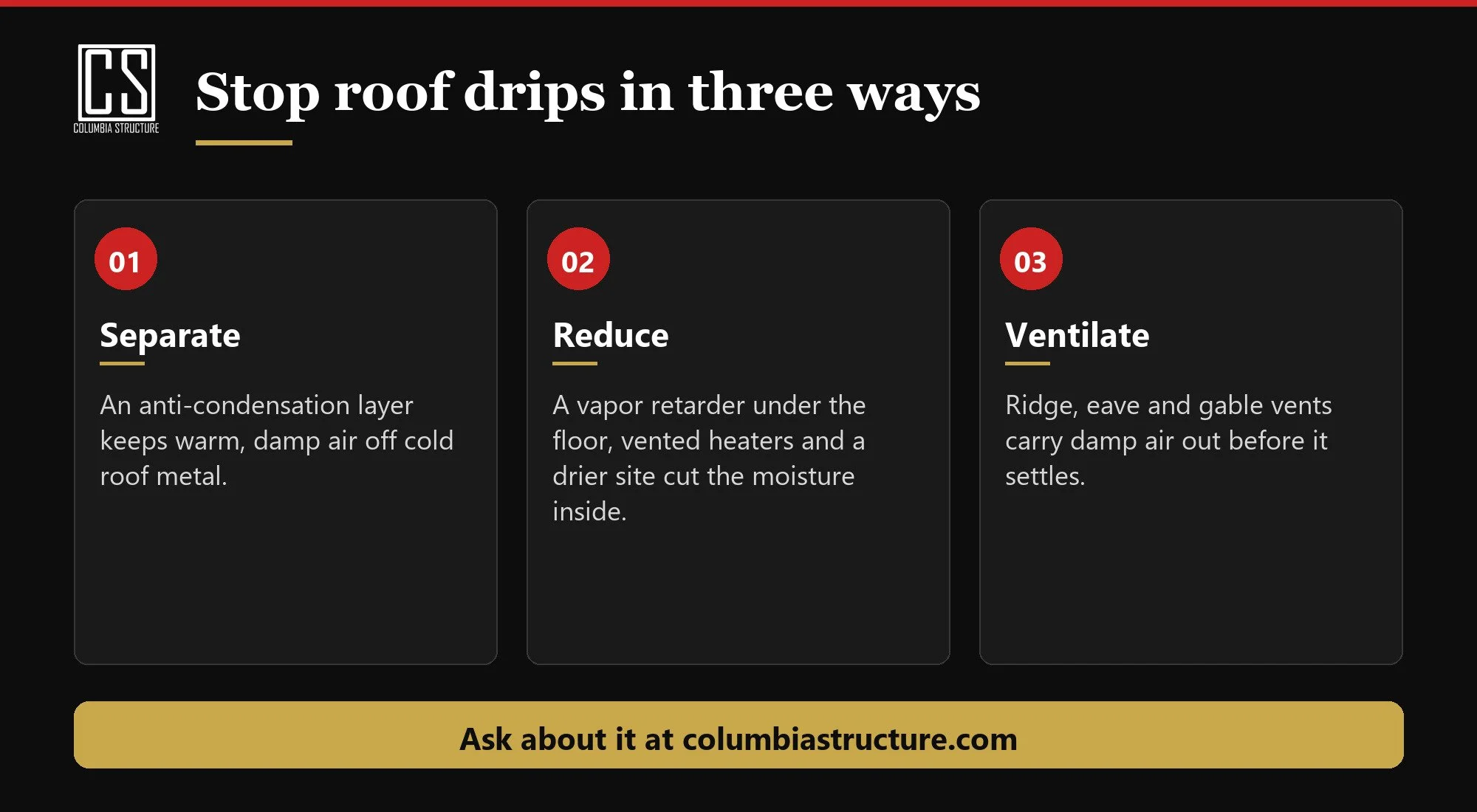
Three Ways to Control It
Condensation control works on three fronts. The best plans use more than one.
1. Keep warm, damp air away from cold metal
An anti-condensation layer on the underside of the roof panels separates the cold metal from the inside air. Two common approaches:
Factory-applied anti-condensation membrane. A fabric-like layer bonded to the underside of the panel that holds small amounts of moisture and releases it as conditions change, instead of letting it drip.
Condensation blanket. An insulation blanket with a facing, installed under the roof panels. It adds some insulation value along with condensation control.
For a building that will be fully heated and insulated, the roof and ceiling insulation plan, with a continuous air and vapor control layer, does this job.
2. Reduce the moisture inside
Pour a slab over a vapor retarder, or put one down under a gravel floor.
Let new concrete cure with the building ventilated.
Use vented heaters that send combustion moisture outside.
Slope the site and manage roof water so the ground around the building stays drier. Our post on pole barn pads and stormwater covers the site side.
3. Move the air
Ventilation carries damp air out before it settles on cold surfaces. Ridge vents, eave or soffit vents, and gable vents all help. A building that is going to be heated needs its ventilation and insulation planned together, so the two do not work against each other.
Why It Matters Beyond the Drips
Dripping water is the symptom you see. Over time, unchecked condensation can stain and damage stored items, encourage mold on wood framing and contents, and shorten the life of fasteners and finishes. It is the kind of problem that grows quietly for years before anyone notices the damage.
Plan It at the Start
Condensation control is much simpler to include when the roof is ordered than to retrofit under a finished roof. It also ties directly into your insulation plan and how you will heat and use the building. If you are weighing insulation choices, start with our guide to pole barn insulation options.
At Columbia Structure, we pay attention to the details others overlook. When you request an estimate, tell us how you plan to use the building, whether it will be heated, and what you will store inside. Ask us about condensation control for the roof, and we will walk you through the options that fit your building and your budget.
For more on how post-frame buildings handle our weather, read are pole barns durable and weather resistant in Washington State.