FAQ
-
What is a pole barn or post-frame building?
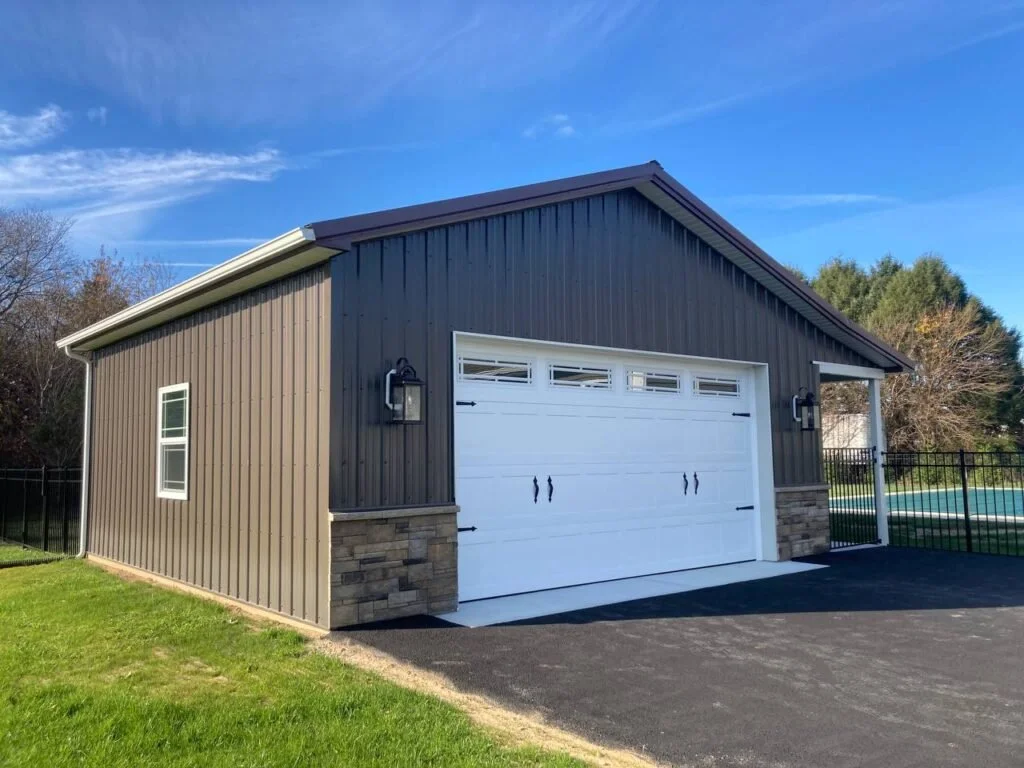
A pole barn, also known as a post-frame building, is a cost-effective and efficient construction method that uses large vertical posts to support the roof and walls. This design eliminates the need for traditional foundations or interior load-bearing walls, making it perfect for garages, shops, barns, and commercial structures.
-
How long does it take to build a pole barn?
Most pole barns can be constructed within 3 to 6 weeks, depending on the size, site conditions, and customization. At Columbia Structure, we streamline the process with pre-engineered kits and experienced crews to keep your project moving efficiently.
-
Are pole barns durable and weather resistant in Washington State?
Yes. Our pole barns are engineered for the Pacific Northwest’s climate. With treated lumber, quality steel siding, and proper drainage systems, our buildings are built to withstand heavy rain, wind, and snow common in Southwest Washington and Cowlitz County.
-
Can I customize my pole barn design?
Absolutely. Columbia Structure offers fully customizable post-frame building kits. You can choose your building size, roof pitch, siding colors, window placements, doors, and even interior layout options to fit your exact needs—whether it’s for a shop, home addition, or agricultural use.
-
Do I need a building permit for a pole barn in Washington State?
Yes, a building permit is typically required. Columbia Structure is familiar with local regulations in Cowlitz County and Southwest Washington and offers a full-service permitting option.
-
How much does a pole barn cost in Southwest Washington?
Pole barn pricing depends on size, materials, site prep, and custom features. Columbia Structure offers transparent quotes and affordable pre-engineered kits to fit various budgets. Contact us today for a free estimate tailored to your location and project scope.
-
How much does it cost to build a pole barn in Cowlitz County, WA?
Pole barn pricing depends on size, materials, site prep, and custom features. Columbia Structure offers transparent quotes and affordable pre-engineered kits to fit various budgets. Contact us today for a free estimate tailored to your location and project scope.
-
Do I need a permit to build a pole barn in Castle Rock, WA?
Yes, Cowlitz County requires building permits for pole barns. Requirements vary by size, use, and zoning, so it’s best to consult with the local building department or your contractor. Columbia Structure can walk you though each and every step.
-
What size pole barn do I need for a two-car garage?
A common size for a two-car garage is 24' x 24', though you may want to go larger (e.g., 30' x 30') for additional storage or workspace.
-
Can a pole barn be used as a permanent home?
Yes, many pole barns are built as 'barndominiums' or permanent residences. You’ll need insulation, utilities, and permits meeting residential code standards.
-
What kind of foundation does a pole barn need?
Pole barns typically use post-in-ground foundations with treated wood posts or concrete-encased columns. A concrete slab floor is often added after the shell is built.
-
Are pole barns cheaper than traditional stick-built buildings?
Generally, yes. Pole barns use fewer materials and faster construction methods, making them more cost-effective for garages, shops, barns, and storage buildings.
-
Can I finance a pole barn build in Washington State?
Yes. Columbia Structures partners with financing providers like Acorn Finance to offer flexible financing options for pole barn kits and full builds.
-
Do pole barns require insulation?
Insulation is optional but recommended if you plan to use your pole barn for residential, commercial, or year-round use. Common options include fiberglass, spray foam, and reflective barriers.
-
Can I customize the design of my pole barn kit?
Absolutely. Columbia Structures offers customizable layouts, roof pitches, siding options, door configurations, and more to meet your specific needs.
-
What is the lifespan of a pole barn?
With proper maintenance, a pole barn can last 40–60 years or more. The longevity depends on materials, site conditions, and upkeep.
-
Do pole barns hold up in heavy snow and wind?
Yes, when engineered properly. Columbia Structures designs pole barns to meet or exceed local snow and wind load requirements in Southwest Washington.
-
What types of siding and roofing are available for pole barns?
Common options include steel panels, board-and-batten, and engineered wood siding. Roofing typically uses metal panels, but shingles can be used if preferred.
-
How do I get started with a pole barn project?
Start by contacting Columbia Structures for a free consultation. We’ll help you choose a design, get a quote, handle permitting, and plan your timeline.
-
Can I assemble a pole barn kit myself?
Yes. Many customers with construction experience choose to DIY. Columbia Structures provides detailed instructions and support and full DIY kits. Full build services are also available.
-
Is a pole barn a good option for farm equipment storage?
Yes. Pole barns offer large open spaces, easy access, and affordable protection for tractors, implements, and feed.
-
Are there tax advantages to building a pole barn?
Some agricultural or business-use pole barns may qualify for tax deductions or depreciation. Consult a tax professional for specific guidance.
-
Can I add onto my pole barn later?
Yes, many pole barns are designed for future expansion. Be sure to mention this in your planning so the design allows for easy additions.
-
Do you offer pole barns in areas outside of Cowlitz County?
Yes, Columbia Structures serves most of Southwest Washington, including Castle Rock, Kelso, Longview, and surrounding areas.
-
What is eave height?
Eave height is the vertical measurement from the finished ground level to the point where the wall meets the roof line of a building. This is where the roof overhang begins. In post frame construction, eave height determines how tall the usable wall space is inside the structure.
-
Is eave height the same as building height?
No. Eave height stops at the top of the wall. Building height includes the roof slope and peak. This distinction matters for permits, zoning limits, and material calculations.
-
Why does eave height matter when designing a building?
Eave height directly affects interior clearance. It determines how tall overhead doors can be, whether equipment or RVs will fit, and how much vertical storage space is available. Choosing the wrong eave height can limit future use.
-
How does eave height affect building cost?
Taller eave heights increase material and engineering requirements. Longer wall posts, more siding, higher wind load design, and additional bracing all increase cost. However, higher eaves often provide better long term value and flexibility.
-
What is a common eave height for a shop or garage?
Many shops and garages are built with 10 foot to 14 foot eave heights. Smaller residential garages may use shorter eaves, while equipment storage and commercial shops often require taller walls.
-
Does eave height affect overhead door size?
Yes. Overhead doors must fit within the wall height below the eave. For example, a 12 foot overhead door typically requires at least a 14 foot eave height to allow room for framing and door hardware.
-
Does increasing eave height change engineering requirements?
Yes. Taller walls increase wind exposure and column loads. Buildings with higher eaves often require larger posts, deeper footings, and additional bracing to meet code requirements.
-
How do I choose the right eave height for my building?
The right eave height depends on building use, door size, future equipment needs, and local code limits. It is best to plan for future use rather than minimum clearance, especially for shops and storage buildings.
-
Is eave height regulated by local building codes?
Yes. Many counties regulate maximum wall and building height. Eave height is commonly reviewed during permitting and zoning approval, especially in agricultural and residential zones.
-
Can eave height be changed later?
Changing eave height after construction is difficult and expensive. This is why it is critical to choose the correct eave height during the design phase.
-
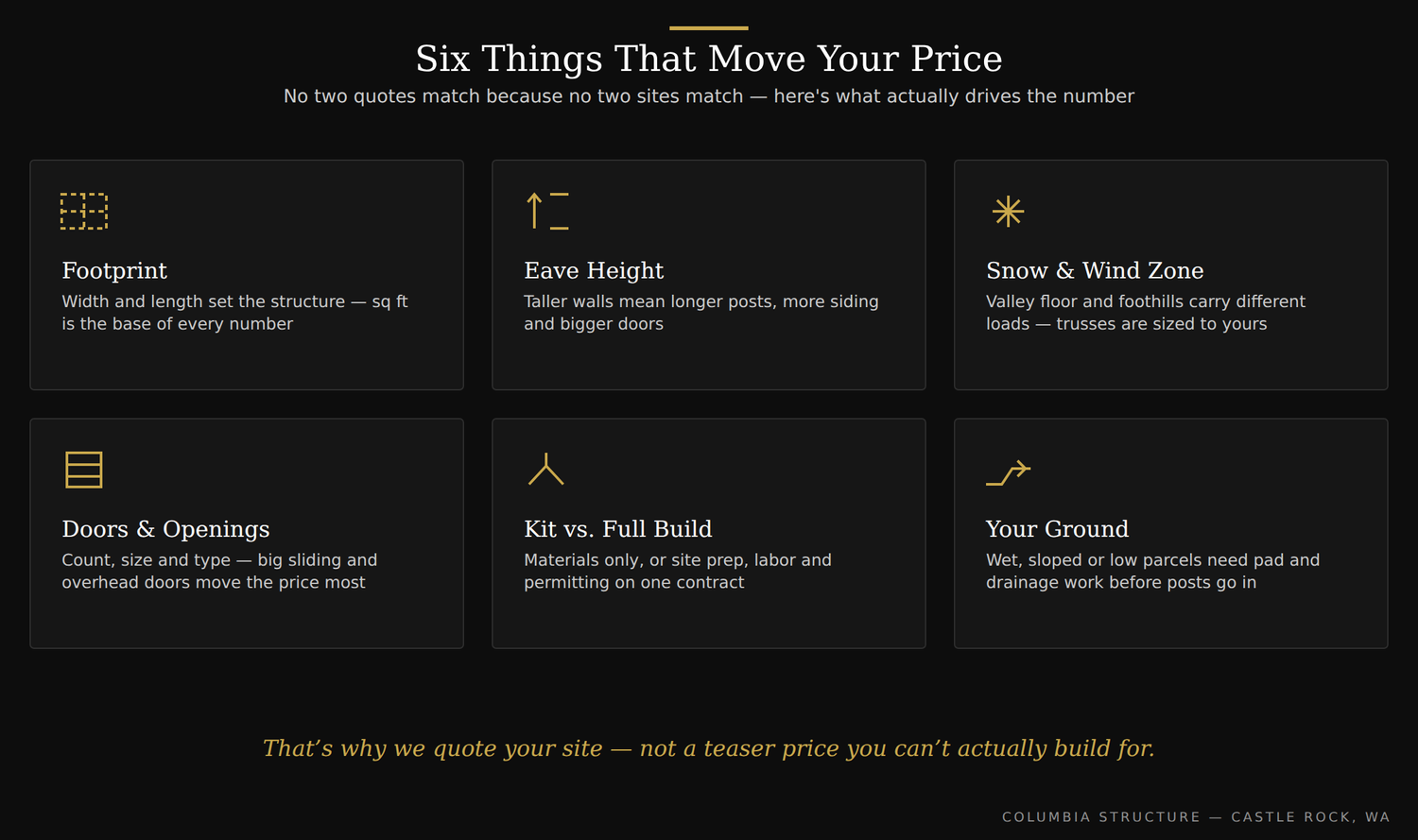
What real costs should I expect beyond materials pricing?
Description goMaterials-only pricing typically doesn’t include labor, concrete, site prep, utilities, doors/windows, interior finishes, or permit fees. A realistic budget adds ~40–80% on top of base kit pricing to cover these items — the exact amount depends on site conditions, building complexity, and local labor rates.es here
-
Why square-foot pricing can be misleading?
Square foot costs are only useful when comparing buildings with the same size, height, load requirements, and site conditions. Without defining variables like snow/wind loads or wall height, per-sq-ft numbers are essentially marketing noise.on goes here
-
How does eave height impact cost?
Eave height dramatically affects both material and labor costs — taller buildings require more lumber, metal, and longer posts, which increases cost even if the footprint stays the same.ion goes here
-
Why load requirements (snow/wind) matter to pricing?
Stronger snow/wind loads require bigger posts, tighter post spacing, heavier roof systems, and more engineering — all of which increase materials and labor costs without changing square footage.
-
What types of pole barn build options exist (kits vs partial vs turnkey)?
Materials-Only Kit: You manage all labor, concrete, site work, permits, and interior work.
Partial Build: Supplier provides materials and handles erection; you manage concrete/site prep and interior finishes.
Turnkey Full Build: One contractor manages everything from site prep through final inspection. columbiastructure.com
-
Do I need site-specific engineering for Washington and Oregon?
Yes — engineering must account for local snow loads, wind exposure, soil conditions, and seismic requirements. Generic out-of-state plans often fail local approval and cause delays.
-
What timeline can I realistically expect from contract to finished building?
From signed contract to finished building, a typical project can take about 4–6 months, depending on design, permit review times, material lead times, weather, and contractor availability.
-
What should be included in a pole barn quote?
A proper quote should clarify whether materials, engineering, site prep, concrete, labor, utilities, doors/windows, interior finishes, and permit fees are included. Anything not explicitly included will increase your final cost.
-
How do pole barn quotes differ from actual final costs?
Quotes that show low materials-only prices rarely reflect real project costs. After engineering, site work, labor, concrete, and utilities are added, the true cost can be 40–80% above the base kit price.
-
Why does snow load affect pole barn pricing?
Higher snow load requirements increase structural demands (stronger trusses, closer post spacing, heavier materials), raising material and labor costs even if the building’s square footage remains the same.
-
Can square-foot pricing be trusted for pole barns?
Not without context — square-foot pricing is only meaningful when size, wall height, load requirements, and site conditions match between buildings being compared.
-
What’s the difference between a materials-only kit and a full turnkey pole barn?
A materials-only kit supplies components and plans; a partial build adds erection services; and a turnkey project includes everything from site prep to final inspection — each level adds cost and reduces owner responsibilities.
-
How long does a pole barn project take from contract to finish?
A realistic timeline from signed contract through permit, engineering, fabrication, site prep, erection, and interior work can be 4–6 months — weather and jurisdictional permit times affect this.