The Real World Pole Barn Planning & Cost Guide

What prices include, what they leave out, and what actually gets permitted and built

Washington and Oregon

What This Guide Is and Is Not

This guide is a planning and education resource. It is not a quote and does not promise final pricing.

Its purpose is to help buyers ask better questions before spending money. Too many people enter the pole barn market with unrealistic expectations, incomplete information, or quotes that look good on paper but fall apart during permitting or construction.

Straight Talk

We believe informed buyers make better decisions. This guide gives you the context to evaluate proposals honestly and avoid expensive surprises down the road.

Whether you're comparing materials-only kits, partial builds, or turnkey construction, understanding what's included and what's not is the difference between a successful project and a costly mistake.

How Pole Barn Prices Are Commonly Presented

When shopping for a pole barn, you'll encounter three common pricing approaches. Each has its place, but understanding what they actually represent is critical.

Materials-Only Pricing

The most common approach in online advertising. Companies quote a package price for structural materials, metal panels, fasteners, and engineered plans. These prices are clean, competitive, and easy to compare. They're also incomplete. Materials-only pricing does not include labor, concrete, site preparation, utilities, or the dozens of other costs required to turn a pile of lumber into a finished building.

Broad Square Foot Ranges

You'll see ranges like "$15-$35 per square foot" thrown around. These ranges are so broad they're nearly meaningless. A 40x60 shop with 12-foot walls and heavy snow load doesn't cost the same per square foot as a 30x40 storage building with 10-foot walls. Square foot pricing can be useful for rough budgeting, but only when the variables are clearly defined.

Engineered Packages Without Context

Some suppliers advertise "engineered packages" as if engineering alone guarantees buildability. In Washington and Oregon, engineering must be site-specific and jurisdiction-approved. A generic stamped plan from out of state often fails local review, leading to redesign costs, delays, and frustration.

The Reality

There's nothing wrong with materials-only pricing or broad estimates. The problem arises when buyers don't understand what these numbers actually represent. This guide clarifies what's included, what's not, and what you need to budget for beyond the advertised price.

What Base Kit Pricing Actually Includes

When you see a materials-only price for a pole barn kit, here's what's typically included:

  • Structural Framing: Posts, girts, headers, and all lumber required for the skeleton of the building
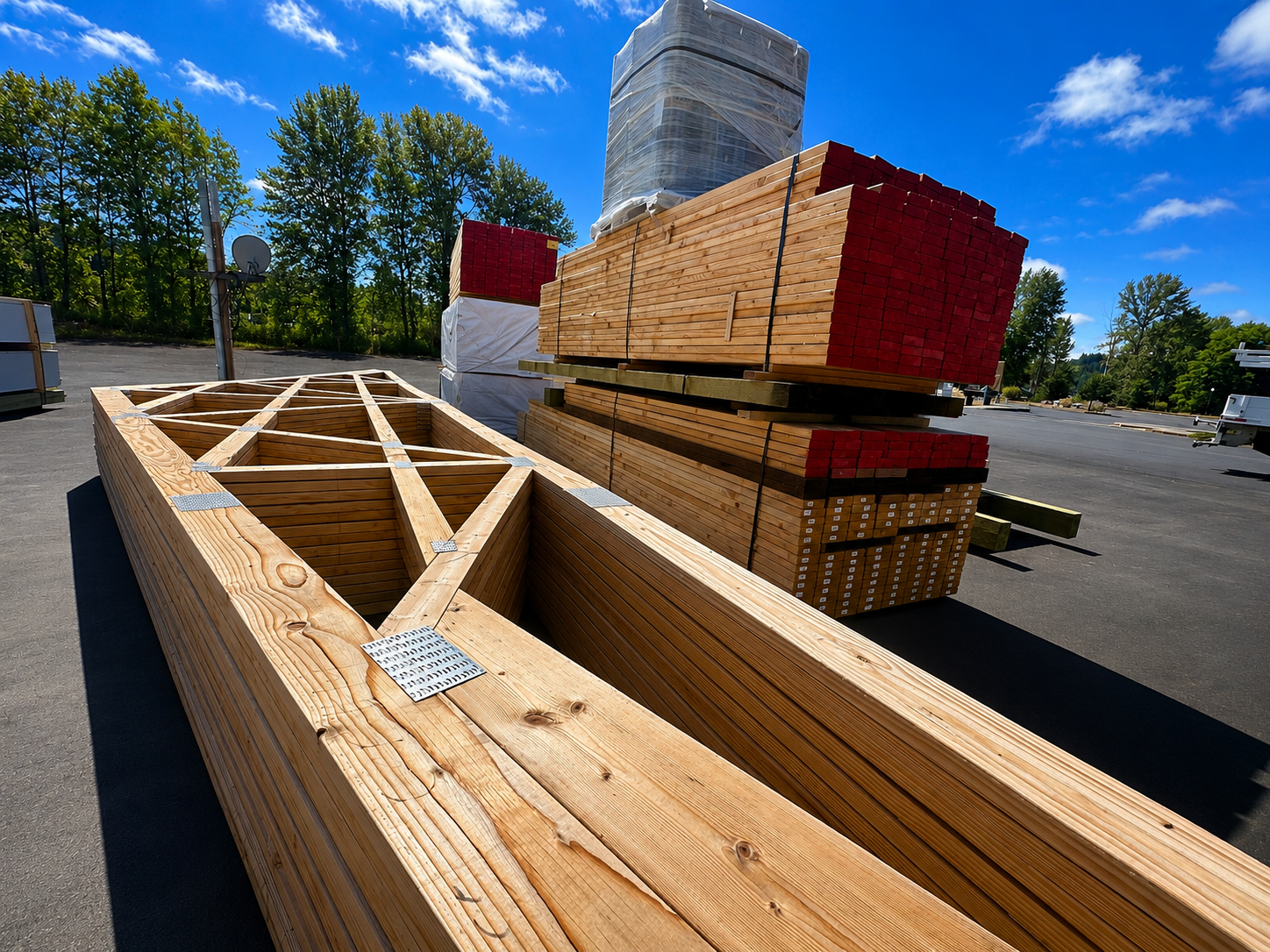
  • Roof Trusses: Engineered trusses to match your span and load requirements
  • Metal Panels: Roof and wall panels in your chosen color and gauge
  • Fasteners and Trim: Screws, clips, flashing, and trim pieces to finish the exterior
  • Engineered Plans: Stamped structural drawings for permitting

What Base Kit Pricing Clearly Excludes

Understanding what's not included is just as important as knowing what is. A typical materials-only quote does not include:

  • Labor: Erection, installation, and finishing work
  • Concrete: Footings, slab, or piers required to support the structure
  • Site Work: Grading, drainage, excavation, or access preparation
  • Utilities: Electrical, plumbing, or HVAC rough-in and installation
  • Doors and Windows: Often quoted separately or as optional upgrades
  • Interior Finishes: Insulation, drywall, flooring, and interior trim
  • Permit Fees: Jurisdiction-specific fees for plan review and inspection
Budget Accordingly

For a realistic project budget, expect to add 40-80% on top of the materials-only price to cover labor, concrete, site work, and finishing. The exact percentage depends on site conditions, building complexity, and local labor rates.

Price Per Square Foot Reality

Square foot pricing is one of the most misunderstood aspects of pole barn cost estimation. While it provides a quick comparison tool, it's deeply misleading without context.

Why Small Buildings Cost More Per Square Foot

A 20x30 building (600 square feet) requires nearly the same engineering, permitting, and fixed material costs as a 30x40 building (1,200 square feet). Doors, trusses, and site mobilization don't scale linearly with footprint. As a result, smaller buildings almost always cost more per square foot than larger ones.

Why Height Matters More Than Footprint

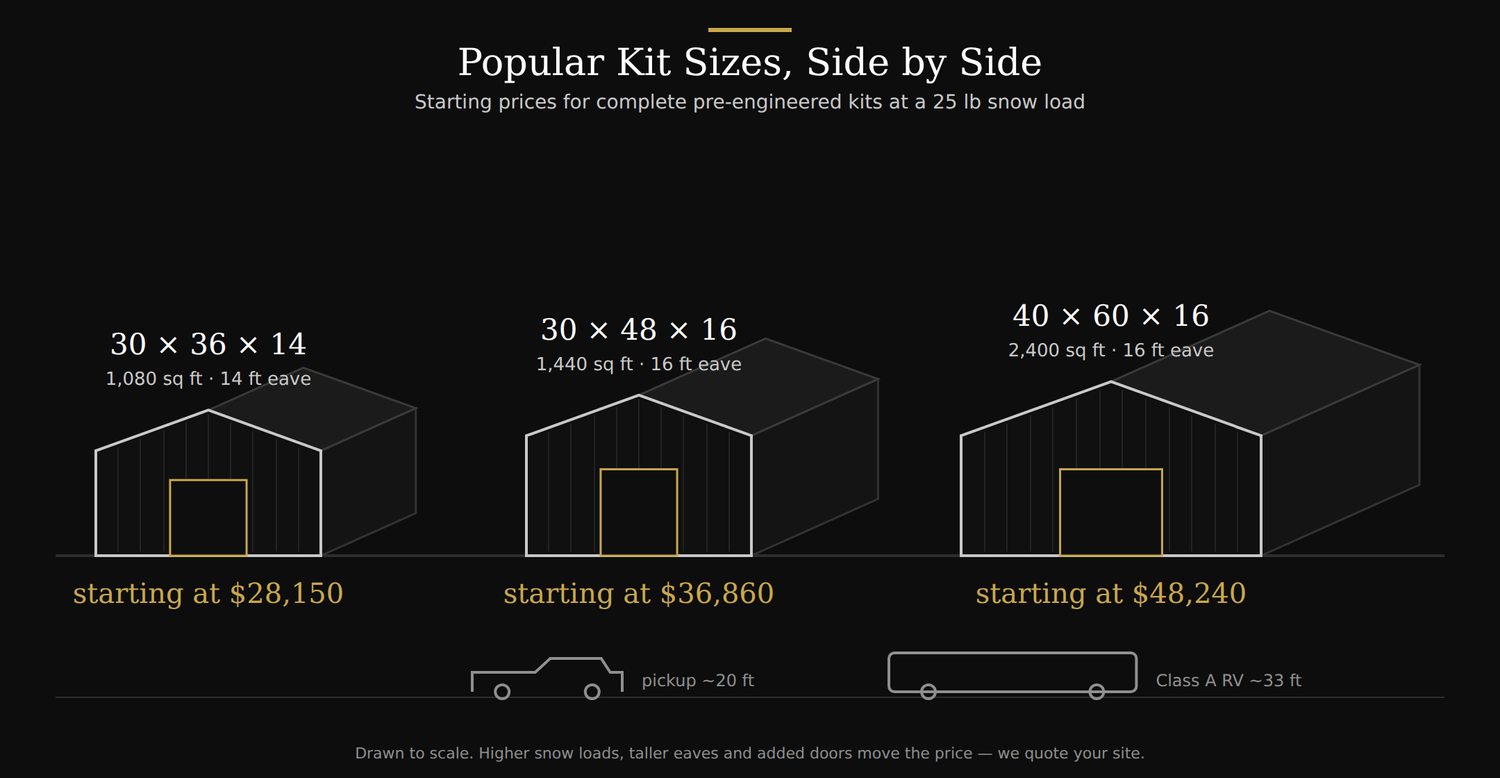
Eave height dramatically impacts material and labor costs. A 30x40 building with 10-foot walls uses significantly less lumber, metal, and labor than the same footprint with 14-foot walls. Yet both are 1,200 square feet. Square foot pricing that ignores height is functionally useless.

Why Loads and Exposure Drive Cost

A building designed for 25 PSF snow load in a low-wind area costs far less than an identical building designed for 50 PSF snow load in high wind exposure. Engineering requirements, post spacing, and truss design all adjust based on load. These factors can easily add 15-25% to material costs without changing the building's footprint.

The Bottom Line

Price per square foot is useful only when comparing buildings of similar size, height, load requirements, and site conditions. Without those variables defined, square foot pricing is marketing noise.

Real World Price Per Square Foot Matrix

The following matrix provides base kit pricing per square foot. These figures are materials-only and assume typical snow and wind loads for Western Washington and Oregon, and standard finish options. Price ranges reflect variations in eave height from 10' to 16'.

Building Size Square Footage Price Range per SF
24x36 864 SF $17.13 - $20.02/SF
30x36 1,080 SF $15.83 - $18.52/SF
36x36 1,296 SF $14.81 - $17.21/SF
30x48 1,440 SF $14.44 - $16.94/SF
36x48 1,728 SF $13.54 - $15.68/SF
36x60 2,160 SF $12.82 - $14.81/SF
40x60 2,400 SF $12.75 - $14.58/SF
48x60 2,880 SF $12.26 - $13.89/SF
42x84 3,528 SF $11.79 - $13.38/SF
48x84 4,032 SF $11.46 - $12.90/SF
48x96 4,608 SF $11.24 - $12.61/SF
Important Notes

Prices shown are per square foot for kit materials only. Price ranges reflect differences in eave height (10' to 16' walls). Taller buildings require more material and cost more per square foot. For turnkey pricing including labor, concrete, and site work, multiply by 2-3x depending on site conditions and finishes.

Why Two Buildings the Same Size Can Cost Very Different Amounts

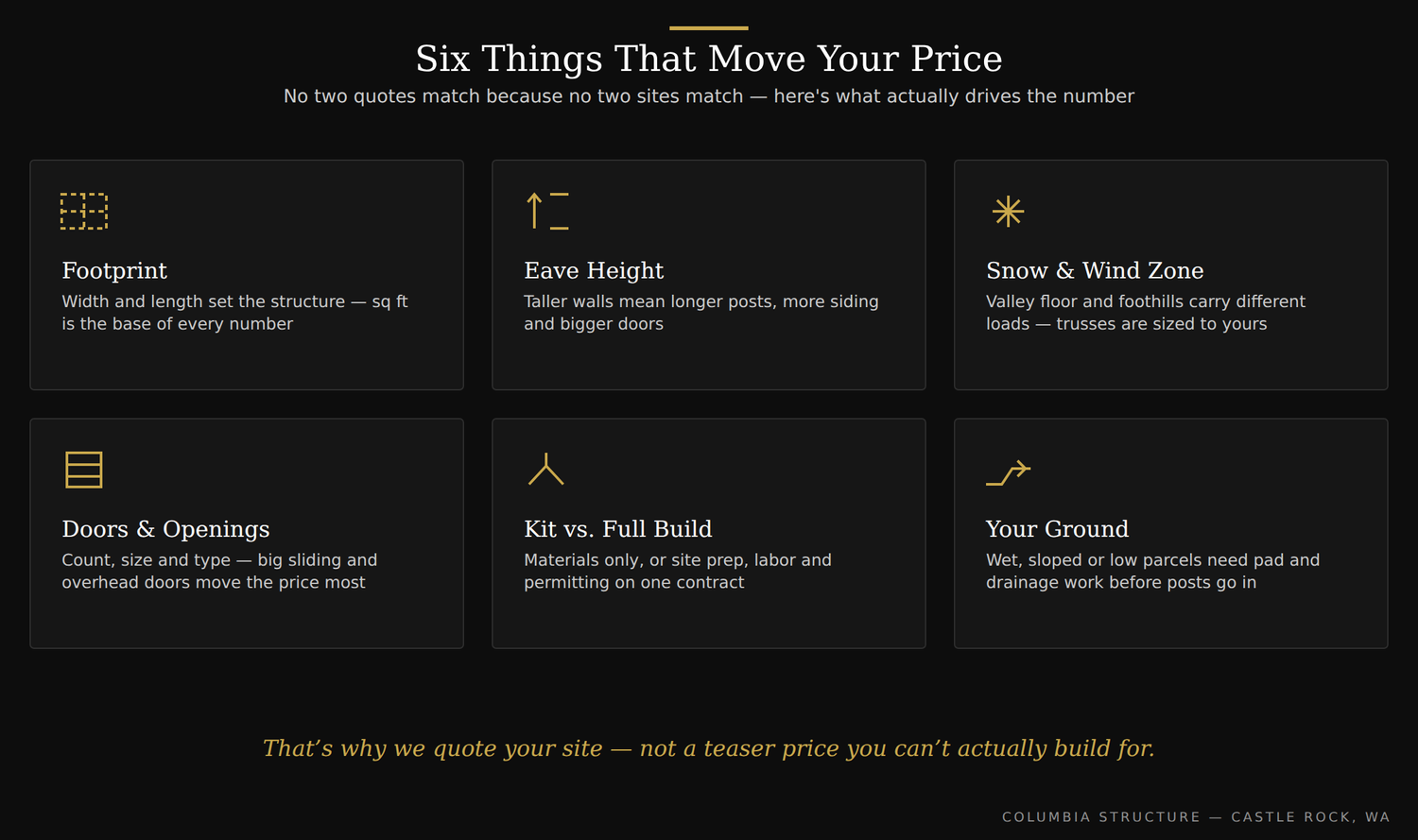
A 40x60 building is not just a 40x60 building. Here are the variables that drive cost even when the footprint remains constant:

Snow Load Requirements

Buildings in higher elevation or heavier snow zones require stronger trusses, tighter post spacing, and heavier girts. A building designed for 50 PSF snow load can cost 20% more than the same building designed for 25 PSF, even though the dimensions are identical.

Wind Exposure

Coastal areas, hilltops, and open fields face higher wind loads. This requires additional bracing, upgraded connections, and more robust engineering. Wind exposure adds both material and engineering costs.

Soil Conditions

Poor soil requires deeper footings, more concrete, or engineered pier systems. A building on solid ground costs less to build than the same building on soft or expansive soil, even though the building itself is identical.

Eave Height

As mentioned earlier, a 12-foot eave height uses more material and labor than a 10-foot eave height. Taller buildings also require taller posts, more metal, and often additional bracing.

Door Configuration

A single 12x12 overhead door costs less than three 10x10 doors. Multiple openings require additional framing, headers, and engineering. Door size and placement have a direct impact on structural cost.

Span Direction

A 40x60 building can be oriented with trusses spanning 40 feet or 60 feet. The longer span requires larger trusses and often costs more. Span direction should be chosen based on site layout, door placement, and engineering efficiency.

Don't Compare Apples to Oranges

When comparing quotes, ensure you're comparing buildings with the same load requirements, eave height, door configuration, and site conditions. A lower price often reflects lower specifications, not better value.

Kits vs Partial Builds vs Full Builds

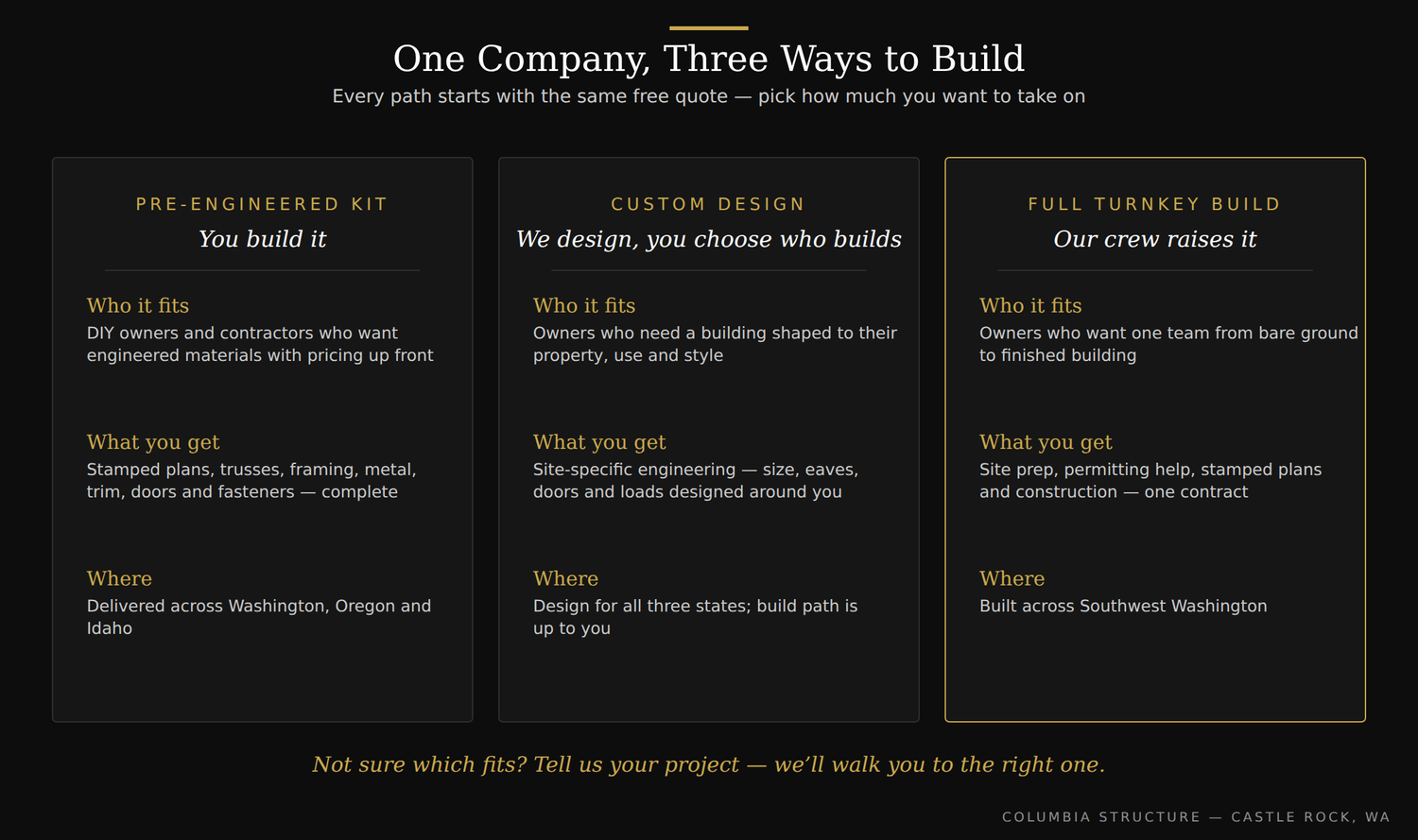
Understanding your build options helps you choose the right approach for your project. Here's a breakdown of the three main paths.

Materials-Only Kit

You receive all structural materials, plans, and fasteners. You're responsible for everything else.

Best For:
  • Experienced builders
  • Those with reliable contractor connections
  • Projects where labor is available in-house
Considerations:
  • You manage all subcontractors
  • You handle concrete, site work, and utilities
  • You're responsible for permitting coordination

Partial Build

Supplier provides materials and handles the building erection. You manage concrete, site work, and finishes.

Best For:
  • Buyers who want the shell built professionally
  • Those willing to finish interior work themselves
  • Projects where scheduling flexibility matters
Considerations:
  • Concrete must be ready before erection begins
  • You still manage utilities and interior work
  • Coordination is critical for timing

Turnkey / Full Build

One contractor handles everything from site prep through final inspection and occupancy.

Best For:
  • Buyers who want a finished, ready-to-use building
  • Those without construction experience
  • Commercial projects requiring single-point accountability
Considerations:
  • Higher upfront cost
  • Less control over subcontractor selection
  • Timeline depends on contractor's schedule
Choose Based on Capability, Not Just Cost

A materials-only kit saves money only if you have the time, skills, and connections to manage the project. A turnkey build costs more but removes risk and uncertainty. Choose the approach that matches your capabilities and timeline.

Permits and Engineering in Washington and Oregon

Permitting and engineering are not optional. They're also not universal. What's required depends on your jurisdiction, building size, and intended use.

County Requirements Vary Significantly

Some counties allow ag-exempt buildings with minimal review. Others require full engineered plans even for small storage buildings. Before purchasing materials, verify your local requirements. Many buyers discover too late that their kit doesn't meet jurisdiction standards.

Engineering Must Be Site-Specific

A stamped plan from another state or a generic template rarely passes review in Washington or Oregon. Engineering must account for local snow loads, wind exposure, soil conditions, and seismic requirements. Plan on site-specific engineering unless you're building in a jurisdiction that explicitly allows generic plans.

Why Generic Plans Fail

Generic or out-of-state plans often fail review because they don't match local codes, don't address site-specific loads, or lack details required by the jurisdiction. When this happens, you pay for re-engineering and face delays while your project sits in review.

Do This Before You Buy

Call your county building department before purchasing any kit or signing any contract. Ask what's required for permitting, whether they accept out-of-state plans, and what the typical review timeline looks like. This one phone call can save you thousands of dollars and months of frustration.

Timeline Expectations

Pole barn construction timelines are longer than most buyers expect. Here's what a realistic timeline looks like from start to finish:

Design and Engineering
2-4 weeks

Finalizing design, site review, and engineering. Site-specific plans take longer than generic templates.

Permit Submission and Approval
2-8 weeks

Varies widely by jurisdiction. Some counties approve in days, others take months. Plan review corrections add time.

Material Fabrication and Delivery
3-6 weeks

Trusses, metal panels, and specialty items are often made to order. Lead times fluctuate with demand.

Site Preparation and Concrete
1-3 weeks

Grading, drainage, and concrete work. Weather delays are common, especially in winter.

Building Erection
1-3 weeks

Framing, roofing, and metal installation. Weather-dependent. Larger or more complex buildings take longer.

Interior Work and Final Inspection
2-6 weeks

Utilities, insulation, drywall, and finishes. Scheduling trades is the bottleneck. Final inspection required for occupancy.

Plan for Delays

From signed contract to finished building, expect 4-6 months for a typical project. Weather, permit review, material lead times, and contractor availability all impact the schedule. Buyers who need a building "by summer" should start planning in winter.

Long Term Cost of Ownership

The cheapest building upfront is rarely the cheapest building over time. Long-term cost of ownership depends on material quality, detailing, and maintenance planning. A well-built pole barn can last 40-60 years with proper construction choices.

Snap-Lock Roofing Panels

Snap-lock (also called standing seam) roofing panels significantly extend roof longevity compared to exposed fastener systems. Unlike traditional screw-down panels, snap-lock panels have fasteners concealed beneath the overlapping panel edge. This design seals fasteners from weather exposure, eliminating the most common failure points in metal roofing. Exposed screws can work loose over time due to thermal expansion and contraction, while rubber washers deteriorate from UV exposure. Snap-lock systems avoid both issues, reducing leak risk and eliminating the need for periodic fastener maintenance. While slightly more expensive upfront, snap-lock panels often outlast exposed fastener roofs by 10-15 years.

Ventilation and Moisture Control

Poor ventilation leads to condensation, rot, and metal corrosion. Properly ventilated buildings with vapor barriers last decades longer than buildings that trap moisture. Ventilation costs a few hundred dollars during construction but saves thousands in maintenance and replacement costs.

Steel Quality Matters

26-gauge steel lasts longer than 29-gauge. Galvalume outlasts painted steel in harsh environments. Cheap metal looks the same on day one but shows wear faster. Investing in quality metal extends the life of the building and reduces maintenance frequency.

Detailing and Flashing

Water intrusion is the biggest long-term issue in pole barns. Proper flashing, trim work, and gutter systems prevent water damage. Buildings detailed for longevity cost slightly more upfront but avoid expensive repairs years later.

Maintenance Planning

All buildings require maintenance. Plan to inspect and reseal penetrations every few years, repaint or touch up metal as needed, and address minor issues before they become major problems. Neglected buildings deteriorate fast.

Think Beyond Initial Cost

A building that costs 10% more upfront but requires half the maintenance over 20 years is a better investment than a cheap building that needs constant attention. Ask suppliers about material quality, roofing system options, ventilation design, and expected maintenance requirements before making a decision.

How to Use This Guide When Comparing Quotes

Use this checklist to compare proposals responsibly and avoid hidden costs:

Quote Comparison Checklist

  • Are load requirements clearly stated? (Snow load, wind speed, seismic zone)
  • Is eave height specified? (10', 12', 14', etc.)
  • What's included in the base price? (Materials only? Labor? Concrete?)
  • What's excluded or optional? (Doors, insulation, gutters, site work)
  • Is engineering site-specific? (Not generic or out-of-state)
  • Does the supplier handle permitting? (Or are you responsible?)
  • What's the material lead time? (2 weeks? 2 months?)
  • Are material specifications detailed? (Steel gauge, lumber grade, truss design)
  • What's the payment schedule? (Deposit, progress payments, final payment)
  • Is there a warranty? (Workmanship, materials, structural)
  • Who handles inspections? (You? Contractor?)
  • What happens if plans fail review? (Who pays for re-engineering?)
Red Flags to Watch For

Avoid suppliers who refuse to clarify what's included, who won't provide material specifications, who promise unrealistic timelines, or who pressure you to sign before you're ready. Good suppliers welcome detailed questions and provide clear answers.

About Columbia Structure

Our Mission

We believe informed buyers make better decisions. Columbia Structure provides transparent pricing, site-specific engineering, and honest guidance throughout the pole barn planning process.

We serve Washington and Oregon with a focus on education, quality materials, and straightforward communication.

Our Approach

Education First: We want you to understand what you're buying before you buy it.

No Hidden Costs: Clear pricing, clear exclusions, clear expectations.

Site-Specific Engineering: Designed for your location, not copy-pasted from templates.

Local Experience: We know Washington and Oregon jurisdictions, codes, and conditions.

Get in Touch

Ready to start your project? Have questions about pricing, engineering, or permitting?

Web: ColumbiaStructure.com

Service Area: Washington and Oregon

We're here to help you plan, price, and build responsibly.