
Pole Barn vs Metal Building: Which Is Right for the Pacific Northwest?
If you're pricing a new shop, garage, or storage building in Southwest Washington, you've probably run into the same wall: half the internet says steel, half says post-frame, and most of the loudest pages are selling one or the other. Steel manufacturers tell you steel. Forums argue in circles. Meanwhile the two things that actually matter here, our wet winters and our real snow loads, barely get mentioned. This is an honest comparison from a local post-frame company that designs and engineers pole barns every week and will still tell you when a metal building is the smarter call.
If you're pricing a new shop, garage, or storage building in Southwest Washington, you've probably run into the same wall: half the internet says steel, half says post-frame, and most of the loudest pages are selling one or the other. Steel manufacturers tell you steel. Forums argue in circles. Meanwhile the two things that actually matter here, our wet winters and our real snow loads, barely get mentioned. This is an honest comparison from a local post-frame company that designs and engineers pole barns every week and will still tell you when a metal building is the smarter call.
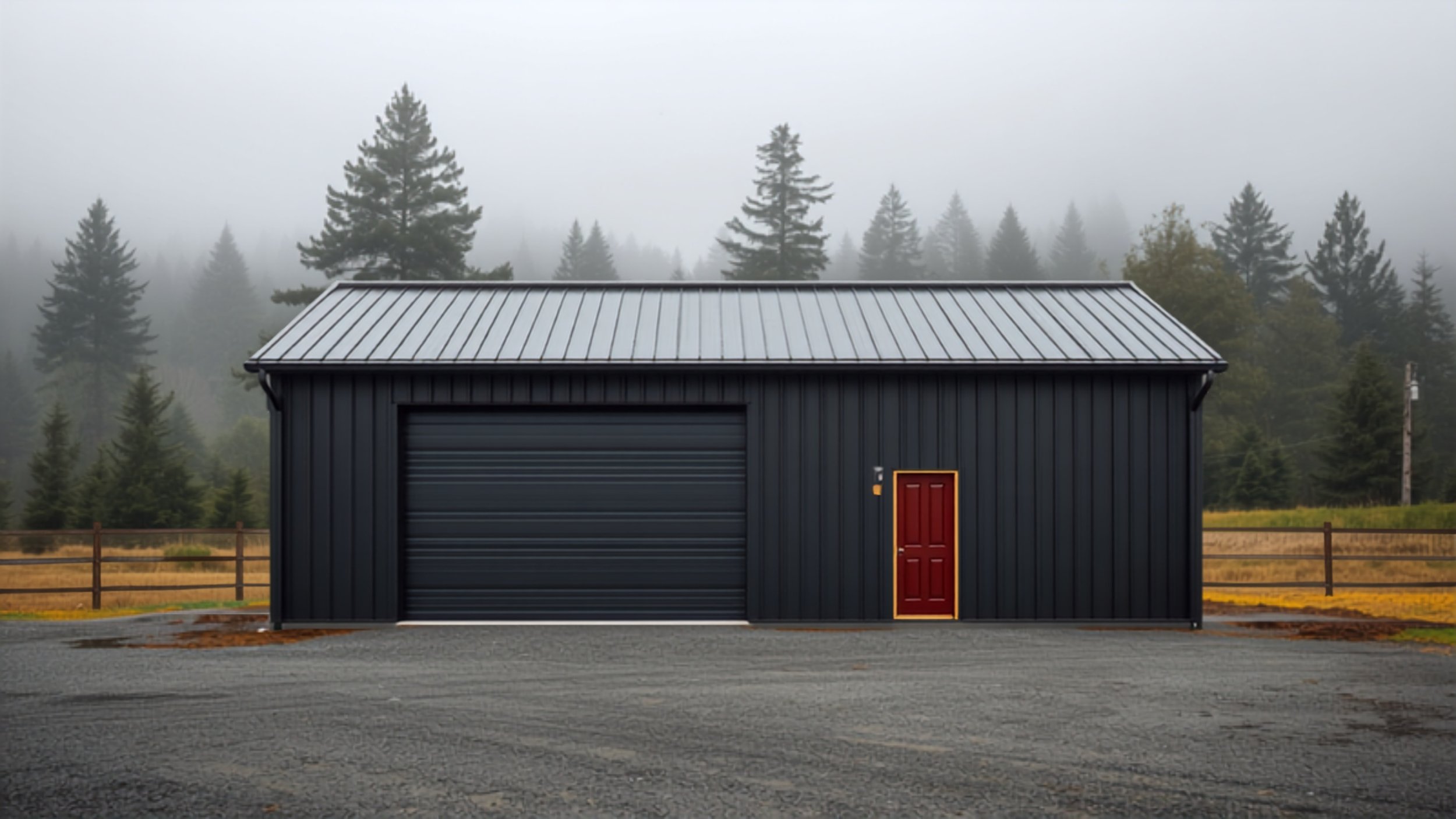
Post-frame pole barn shop with charcoal metal roofing and a red door on a gravel pad in the Pacific Northwest
The short answer for PNW property owners
A **pole barn** (the trade term is post-frame) is a building framed with large engineered wood posts set on the ground and wrapped in metal siding and roofing. A **metal building** (often red-iron or steel) is framed with a welded or bolted steel skeleton. Both are strong, both are common, and both can be permitted and engineered for our region. For most shops, garages, ag buildings, and RV or equipment storage on Washington, Oregon, and Idaho property, post-frame gives you more usable building for the money. Fewer moving parts, and it goes up faster. For certain large commercial spans or specific fire-rated uses, steel earns its price. The rest of this guide shows you where each one wins.
Pole barn vs steel building: cost per square foot
Cost is where most "pole barn vs metal building" searches start, so start honest. On a typical shop or garage in our size range, a post-frame building usually costs less per square foot than a comparable red-iron steel building, because post-frame uses fewer foundation and framing components and goes up faster. Steel closes the gap on very large clear-span commercial buildings, where its engineering does more work. At
Columbia Structure, our construction-ready kits start at real, published numbers, not teaser pricing:
30 x 36 x 14 from **$28,150**
30 x 48 x 16 from **$36,860**
40 x 60 x 16 from **$48,240**
Those are starting points, and final cost varies by size, doors, insulation, and the snow and wind load your site is engineered for. We confirm every number with a real quote before anything is ordered. There's no online payment and no surprise total. Financing through Acorn lets you pre-qualify without impacting your credit.
Post-frame vs steel building: snow, wind, and engineering
This is the section the national pages skip. A building that's fine in Texas isn't automatically fine in Cowlitz, Lewis, or Clark County. Ground snow loads here change with elevation, from valley towns up to heavier mountain loads around places like Morton and Mossyrock, and coastal wind exposure adds its own demands.
This is the section the national pages skip. A building that's fine in Texas isn't automatically fine in Cowlitz, Lewis, or Clark County. Ground snow loads here change with elevation, from valley towns up to heavier mountain loads around places like Morton and Mossyrock, and coastal wind exposure adds its own demands.
Post-frame and steel can both be engineered to meet those loads. The difference is how. A post-frame building carries load through engineered posts and trusses spaced and sized for your specific site, and every Columbia Structure building ships with stamped plans engineered to your county's snow and wind. A red-iron building carries load through its steel frame, which is excellent for long clear spans but is often over-built (and over-priced) for a two or three bay shop. The right answer isn't "which material is stronger." It's "which system is engineered right for this site, at this size, for this use."
Post-frame and steel can both be engineered to meet those loads. The difference is how. A post-frame building carries load through engineered posts and trusses spaced and sized for your specific site, and every Columbia Structure building ships with stamped plans engineered to your county's snow and wind. A red-iron building carries load through its steel frame, which is excellent for long clear spans but is often over-built (and over-priced) for a two or three bay shop. The right answer isn't "which material is stronger." It's "which system is engineered right for this site, at this size, for this use."
Lifespan, maintenance, and repairs
Steel-building sellers like to claim their frame simply lasts longer. The honest version: both hold up for decades when they're built right and maintained. A post-frame building's engineered posts and premium metal skin are designed for a long service life, and the metal roofing and siding we use carry long manufacturer coverage. Where post-frame is easier is repairs and changes. Wood framing is simpler to modify, add a door, a window, or a lean-to later, and simpler for most local crews to service. Steel frames resist rot and pests inherently, which matters in specific environments, but they're less forgiving to alter once they're up.
When a metal building is the better call
We design and supply post-frame, and we'll still send you to steel when steel is right. A metal building can be the better choice when you need a very large clear-span commercial space with no interior posts, when a specific fire rating or insurance requirement calls for non-combustible framing, or when a jurisdiction or use case specifically requires it. Naming that honestly is the point. You should choose the building that fits your property, your budget, and your use, not the one whose salesperson talked loudest. For the shops, garages, ag buildings, and storage most Southwest Washington owners are after, post-frame is usually the one that gives you more building for less.
Building in the Pacific Northwest: how we do it
Columbia Structure is a Castle Rock post-frame kit designer and supplier, and the 2025 Contractor of the Year for the Cowlitz County 811 Utility Council. We grew out of an excavation company, so we're thinking about your site before the first shovel hits the dirt. You get one experienced, accountable point of contact from design to finished building, and three ways to buy: a fully custom design, a construction-ready DIY kit, or a build we coordinate with a trusted local build partner. Kits ship across Washington, Oregon, and Idaho. Coordinated builds and on-site groundwork are Southwest Washington. It's big-picture expertise with small-town values, built right from the start. You can [explore our custom post-frame buildings](/custom-pole-barns), [read the pole barn buyer's guide](/pole-barn-buyers-guide) to size and price yours, or get a real quote with no online payment. Want to see it first? Design your building free in our 3D pole barn designer.
## FAQ
Is a pole barn cheaper than a metal building? For most shops, garages, and storage buildings in our size range, yes, post-frame usually costs less per square foot than a comparable red-iron steel building and goes up faster. Very large clear-span commercial buildings are where steel closes the gap. We confirm your exact cost with a real quote.
Which lasts longer, a pole barn or a metal building? Both last for decades when they're engineered, built, and maintained properly. Post-frame uses engineered wood posts with a premium metal skin, and it's easier to modify or add onto later. Steel resists rot and pests inherently. The bigger factor is engineering and build quality, not the material alone.
Can a pole barn handle Pacific Northwest snow and wind? Yes, when it is engineered for your site. Every Columbia Structure building comes with stamped plans engineered to your county's ground snow load and wind exposure, including the heavier mountain snow loads in parts of Lewis County. Thinking about a new building? Get a free quote or call 360-957-8847. We will help you choose the building that is right for your property, not just the one we happen to sell.