
How Eave Height Affects Cost, Engineering, and Long Term Value
Does Eave Height Affect the Cost of a Pole Barn?
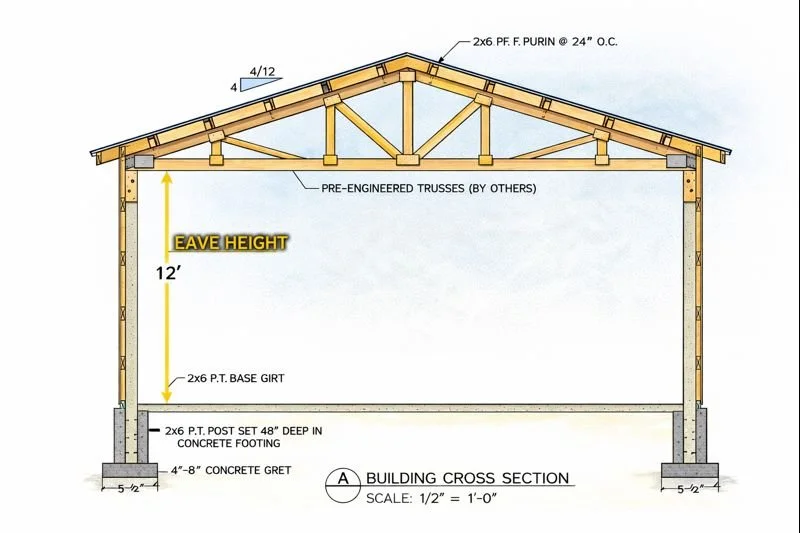
Yes. Increasing eave wall height increases material and engineering requirements. Taller walls require longer posts, more siding, additional bracing, and higher wind load design considerations. Concrete footing depth and post embedment may also increase depending on engineering requirements.
While taller eave heights increase upfront cost, they often provide better long term value by improving building usability and reducing the risk of future limitations.
Structural and Engineering Impacts of Taller Eave Walls
As eave wall height increases, wind exposure and column loads also increase. This often requires larger or deeper embedded posts, additional bracing, and revised truss designs. Roof truss engineering is directly tied to eave height and roof pitch.
These factors are why eave height must be coordinated with engineering early in the design process to ensure structural integrity and code compliance.
Interior Benefits of Proper Eave Height
Taller eave walls improve airflow, lighting options, and insulation flexibility. They allow for future upgrades such as loft storage, mezzanines, taller interior partitions, and improved ventilation systems.
For shop buildings, increased wall height improves comfort, usability, and long term adaptability as equipment and needs change.
Choosing the Right Eave Height for Your Building
The best eave wall height depends on building use, overhead door size, equipment clearance, interior finishes, and future plans. Planning only for minimum clearance often leads to regret. Most experienced builders recommend choosing an eave height that provides flexibility rather than cutting it too close.
Discussing eave height early helps balance cost, performance, and long term value.
Can Eave Height Be Changed Later?
Changing eave wall height after construction is extremely difficult and expensive. It typically requires major structural modifications and re engineering. In most cases, it costs far more than choosing the correct eave height during initial design.
This is why eave height is considered one of the most critical decisions in pole barn and post frame building design.