

What Eave Height Means and Why It Matters in Pole Barn Construction
What Is Eave Height?
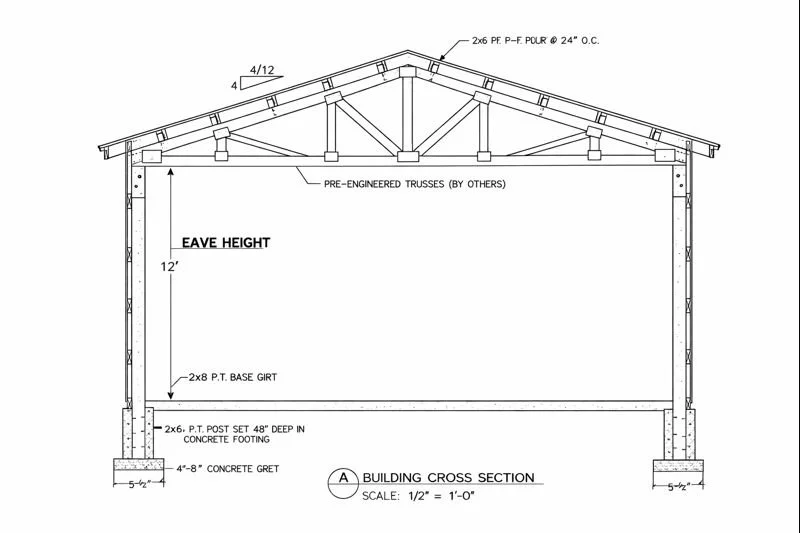
Diagram of what an Eave Wall Height (Eave Height) on a pole barn
Eave height, often referred to as eave wall height, is the vertical distance measured along the wall column from the finished slab or finished grade up to the bottom of the roof truss at the eave wall. In post frame and pole barn construction, this measurement defines the true usable wall height inside the building.
Eave height is measured inside the building, following the pole from the slab to the truss bearing point. It is not measured to the roof peak and it does not include roof slope. This makes eave height one of the most important dimensional references used in design, engineering, and material takeoffs.
Eave height is not the same as overall building height. Overall building height includes the roof pitch and ridge peak. Eave height stops at the truss at the eave wall. This distinction is critical for permitting, zoning compliance, door sizing, and interior planning.
Why Eave Height Is One of the Most Important Design Decisions
Eave wall height directly controls interior clearance. It determines how tall overhead doors can be, whether equipment or vehicles will fit, how much vertical storage is available, and whether lifts, mezzanines, or tall shelving systems can be installed.
A building with insufficient eave height may function on paper but fail in real world use. Many owners later realize that adding just a few feet of wall height would have prevented major limitations. Because eave height cannot be practically changed after construction, it should always be planned with future use in mind.
How Eave Height Affects Overhead Doors and Access
Overhead doors must fit within the clear wall height below the truss. For example, a twelve foot overhead door typically requires at least a twelve foot eave wall height to allow space for door framing, track, and hardware.
Failing to account for this clearance is a common and costly mistake. This consideration is especially important for shops, RV storage, agricultural buildings, and commercial structures where tall vehicles or equipment are involved.
Common Eave Heights for Pole Barns
Residential garages commonly range from ten to twelve feet of eave wall height. Shops and workshops often use twelve to fourteen feet. Equipment storage, RV barns, and commercial buildings frequently require taller eave heights depending on machinery size and operational needs.
The correct eave height depends on how the building will be used today and how it may be used in the future.
Local Code and Permit Considerations
Many counties regulate maximum wall height and overall building height. Eave wall height is often reviewed during zoning and permitting, especially in residential and agricultural zones. Clearly defining eave height early in the design process helps avoid permit delays, redesigns, and compliance issues.