

Why Pole Barn Square Foot Pricing Is Often Misleading
One of the most common questions people ask when researching a pole barn is simple: How much does it cost per square foot? At first glance, that sounds reasonable. Square foot pricing is familiar, quick, and easy to compare. The problem is that for pole barns, square foot pricing often creates more confusion than clarity.
If you are comparing buildings based only on a dollar per square foot number, you are likely comparing apples to oranges. Two buildings with the same footprint can vary drastically in cost due to factors that square foot pricing completely ignores.
This is why square foot pricing should be treated as a rough conversation starter at best, not a decision making tool.
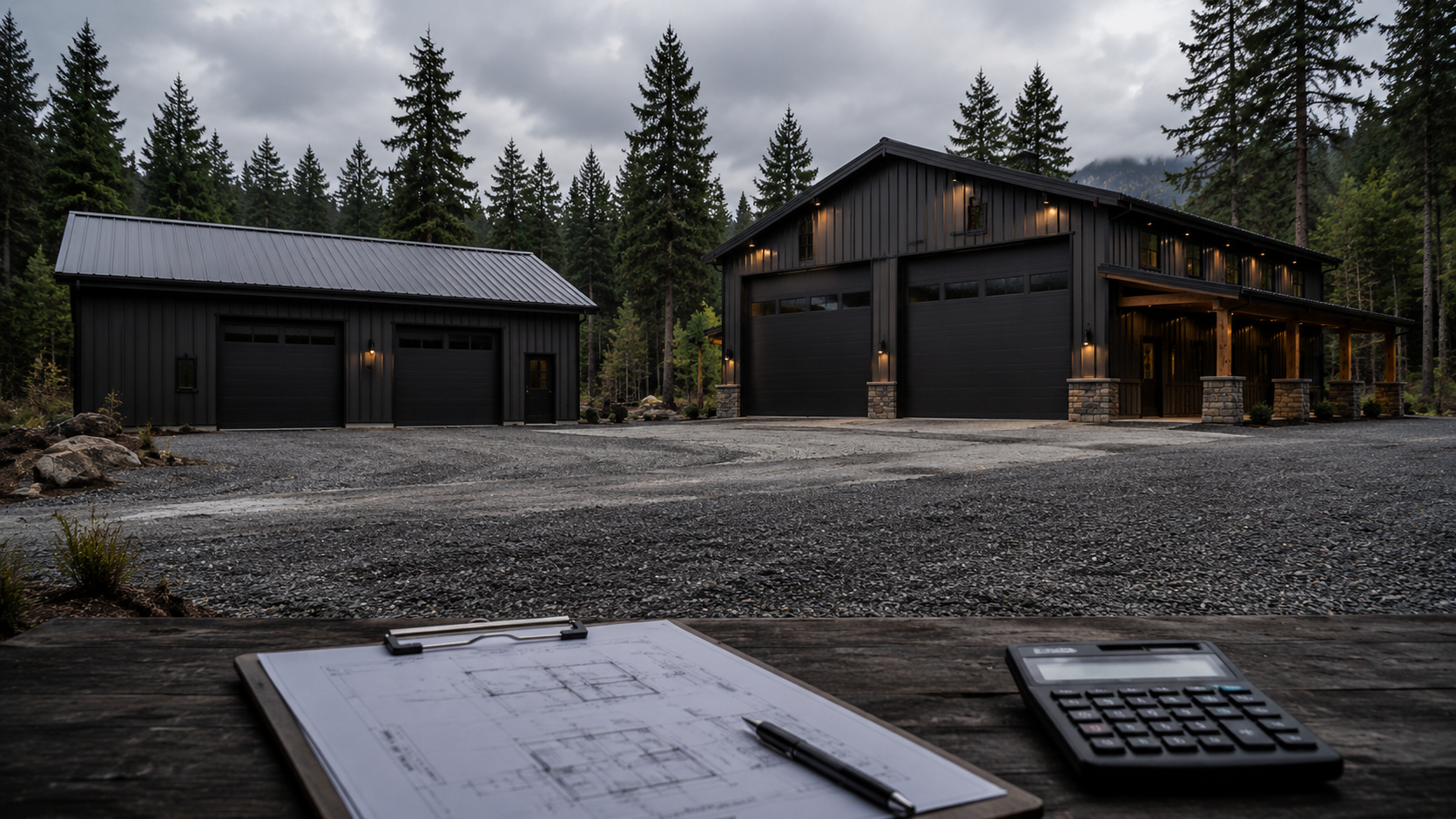
Why Pole Barn Square Foot Pricing Is Often Misleading
What Square Foot Pricing Assumes
Square foot pricing assumes that all buildings being compared are equal in the following ways:
Same building width and length
Same wall height
Same roof pitch
Same snow and wind load requirements
Same site conditions
Same scope of work
In real world pole barn projects, these conditions are almost never identical.
A twenty-four by thirty-six building with ten-foot walls in a low snow-load area is not comparable to a twenty-four by thirty-six building with sixteen-foot walls engineered for higher snow loads. Yet square foot pricing treats them as if they are the same building.
Wall Height Changes Cost Without Changing Square Footage
One of the biggest reasons square foot pricing breaks down is wall height. Increasing the eave height increases costs, even though the building's footprint remains unchanged.
Taller buildings require:
Longer posts
More wall steel or siding
Additional framing
Larger doors
More labor
A twelve-foot-tall building can cost significantly more than a ten-foot-tall building with the same square footage. Square foot pricing does not capture this difference at all.
Snow Load and Wind Load Are Invisible in Per Square Foot Numbers
Structural load requirements are another major factor that square foot pricing ignores.
Snow load and wind load directly affect:
Truss size and spacing
Post size and spacing
Connection hardware
Engineering requirements
A building engineered for higher snow loads will cost more even if the footprint is identical. Square foot pricing does not tell you what load rating the building is designed for, which makes comparisons misleading.
Site Conditions Can Double the Real Cost
Square foot pricing usually reflects only the materials package. It rarely includes the realities of the site where the building will be constructed.
Site conditions that affect cost include:
Slope or uneven terrain
Soil type
Drainage requirements
Access for equipment
Required site prep or excavation
Two identical buildings can have vastly different final costs depending on the property. Square foot pricing does not account for this at all.
Internal link placement:
Link to a future blog on site preparation or site specific planning for pole barns.
What Is Included Matters More Than the Price
Another common issue with square foot pricing is that it rarely defines what is included.
Many advertised prices exclude:
Concrete
Labor
Engineering
Permits
Doors and windows
Insulation
Interior finishes
This is why a low square foot number often grows rapidly once real project requirements are added.
A higher square foot price that includes engineering and realistic scope is often more accurate and safer than a low number that only reflects materials.
Internal link placement:
Link this section to a blog titled What Should Be Included in a Pole Barn Quote.
Why Square Foot Pricing Is Used Anyway
Square foot pricing is popular because it is easy to market. A single number looks clean and competitive, especially online.
The problem is that it encourages buyers to focus on price instead of suitability. A building that is cheaper per square foot but under engineered or incomplete is not a good value.
Pole barns are structural systems, not commodities. They must be designed around how you plan to use them, where they will be built, and what conditions they must withstand.
A Better Way to Compare Pole Barn Costs
Instead of asking for cost per square foot, ask these questions:
What loads is the building engineered for
What wall height is included
What is included and excluded in the quote
What site assumptions are being made
Who is responsible for permits and engineering
When these details are clear, cost comparisons become meaningful.
Internal link placement:
Link this section to a future blog titled How to Compare Pole Barn Quotes Without Getting Burned.
Where the Buyers Guide Fits In
This is exactly why a detailed buyers guide matters. It walks through the variables that actually affect cost so you can make informed decisions instead of relying on oversimplified pricing.
If you want a realistic understanding of pole barn pricing, timelines, and build options, the Buyers Guide explains how all of these factors work together.
Internal link placement:
Link the phrase Pole Barn Buyers Guide directly to your buyers guide page.
Final Thoughts
Square foot pricing is not wrong. It is just incomplete.
When used without context, it hides the very factors that determine whether a pole barn will meet your needs and pass local approval. Understanding what drives cost gives you leverage, clarity, and confidence as a buyer.
If a price sounds too good to be true, it usually is. The details always matter more than the number.