

Pole Barn vs Stick Built Garage: Which Is Cheaper?
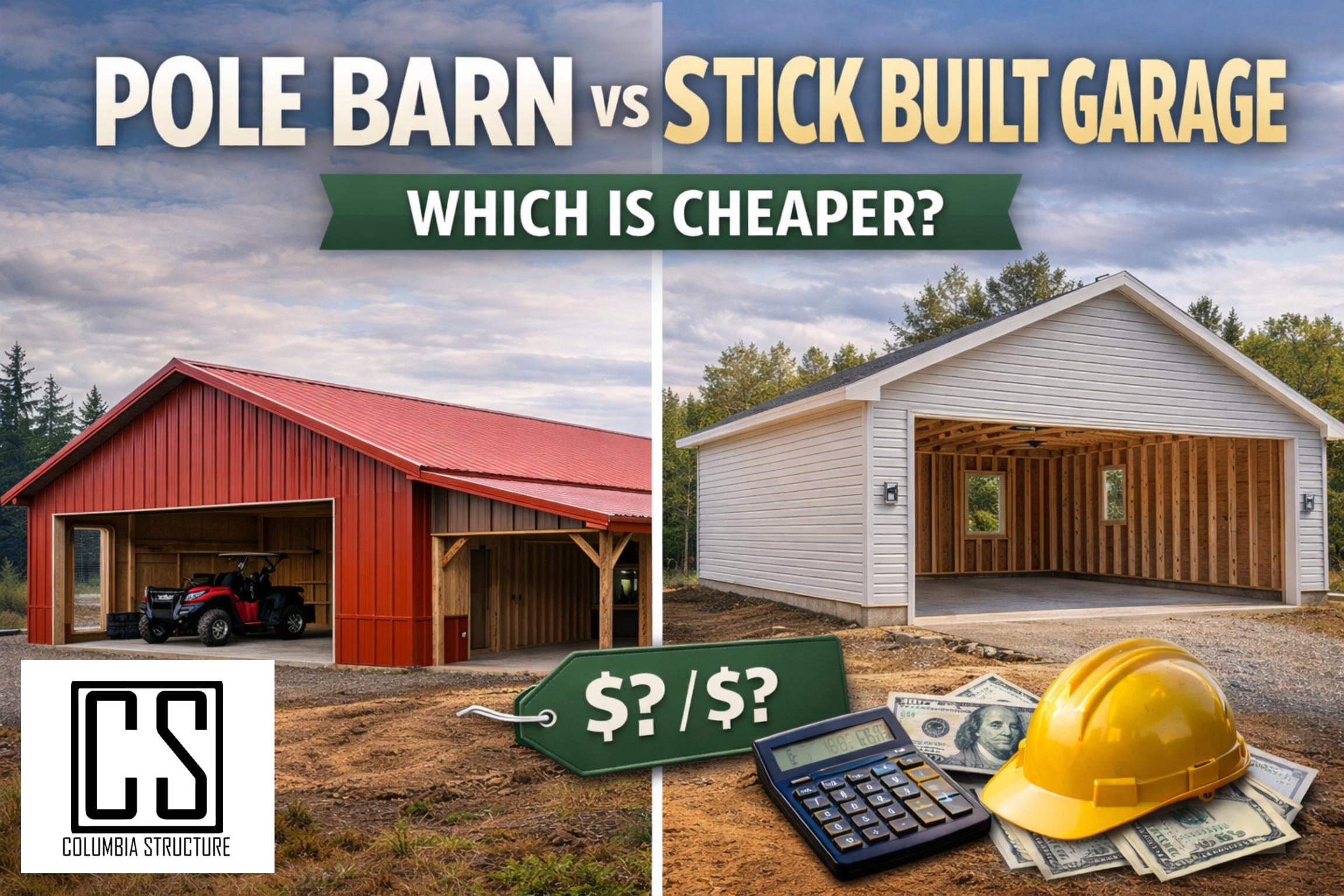
If you are planning to build a shop or garage on your property, one of the most common questions property owners ask is simple: Should I build a pole barn or a traditional stick built garage?
Both construction methods can create strong, durable buildings, but the cost, construction timeline, and design flexibility can be very different. Understanding these differences can help you choose the best option for your property and budget.
Across the Pacific Northwest, many property owners are choosing pole barn construction for garages and shops because it is often more affordable and faster to build than traditional stick built structures.
Pole Barn vs Stick Built Garage - Columbia Structure
What Is a Pole Barn?
A pole barn, also called a post frame building, is a structure that uses large vertical posts set in the ground or mounted to a foundation to support the building’s weight. Roof trusses span between the posts, creating wide open interior spaces without many interior walls.
Because pole barns rely on fewer structural materials and do not always require a full perimeter foundation, they can often be built more efficiently than traditional framed garages.
Pole barns are commonly used for:
• garages
• workshops
• agricultural buildings
• equipment storage
• hobby shops
Modern pole barn designs often include engineered trusses, metal siding and roofing, and customizable door and window layouts.
What Is a Stick Built Garage?
A stick built garage is constructed using the same framing method used in most residential homes. Walls are built using dimensional lumber studs that sit on top of a concrete foundation or slab. The roof structure is then framed or built using trusses.
Stick built garages are commonly chosen when property owners want the garage to closely match the design and materials of their home.
These garages typically include:
• full concrete foundations
• framed stud walls
• traditional roofing materials
• siding similar to the home
While stick built garages are very common, they typically require more materials and labor than pole barn construction.
Average Cost of a Pole Barn Garage
The cost of a pole barn garage depends on size, materials, site conditions, and customization. However, many projects fall within a typical price range.
Across many parts of Washington and the Pacific Northwest, pole barn construction often costs between $25 and $55 per square foot depending on design and features.
For example:
A 30x40 pole barn garage (1,200 sq ft) may cost roughly $30,000 to $60,000 depending on doors, concrete floors, insulation, and other upgrades.
DIY builders can often reduce costs further by purchasing pole barn kits, which usually include the structural lumber, engineered trusses, metal siding, roofing panels, and fasteners needed to construct the building shell.
Average Cost of a Stick Built Garage
Stick built garages usually cost more per square foot because they require additional framing materials and a full foundation.
In many parts of the United States, stick built garages often range between $50 and $90 per square foot depending on labor costs, roofing materials, siding, and foundation work.
For example:
A 30x40 stick built garage could cost roughly $60,000 to $100,000 or more depending on materials and design.
Labor costs are a major factor because stick built garages require more framing work, additional materials, and longer construction timelines.
Why Pole Barns Are Often Cheaper
There are several reasons pole barn construction can be more affordable than stick built garages.
Fewer Materials
Post frame construction uses large structural posts instead of closely spaced wall studs. This reduces the amount of lumber needed for the structure.
Faster Construction
Pole barns can often be constructed faster than traditional garages because the framing system is simpler. Fewer structural components can reduce labor costs.
Foundation Flexibility
Many pole barns do not require a full concrete perimeter foundation. In some cases, posts are set directly into the ground or mounted to concrete piers, reducing foundation costs.
Large Open Interiors
Because pole barns rely on engineered trusses spanning between posts, they can create large open interior spaces without load bearing interior walls.
This makes them ideal for shops, equipment storage, and large garages.
When a Stick Built Garage Might Be Better
While pole barns are often more affordable, there are situations where a stick built garage may be preferred.
Some homeowners choose stick built garages because:
• they want the building to visually match their house
• local zoning rules require traditional construction
• the garage will be attached to the home
• specific architectural features are desired
Stick built construction can also be easier to finish with interior drywall and insulation if the building will be used as conditioned living space.
Choosing the Best Option for Your Property
For many property owners who want a large shop, garage, or equipment building, pole barn construction offers a strong combination of affordability, durability, and flexibility.
Post frame buildings have become extremely popular across the Pacific Northwest because they can handle regional weather conditions while providing large interior spaces for vehicles, tools, and equipment.
If your primary goal is building a functional garage or shop at a lower cost, a pole barn is often the most economical option.
However, every project is different. Factors such as building size, site conditions, permitting requirements, and design preferences will influence the final cost of either construction method.
Working with a local builder or supplier who understands regional building requirements can help you determine the best structure for your needs.
Whether you choose a pole barn or a stick built garage, careful planning and proper engineering will ensure your building provides reliable service for many years.